
Honest PNW checklist: when DIY cosmetic crack repair is fine, when movement or ponding means hire, and when overlay beats another hardware-store bag.
Proudly serving King, Snohomish & Skagit County, WA
YouTube and the hardware aisle make every crack look like a weekend fix—and Western Washington weather makes a lot of those patches peel. Olsen helps King, Snohomish, and Skagit homeowners decide DIY concrete crack repair vs calling a pro with an honest checklist: when a cosmetic fix is fine, when movement or ponding means stop, and when restore-first overlay beats another bag. Call (425) 215-2560.
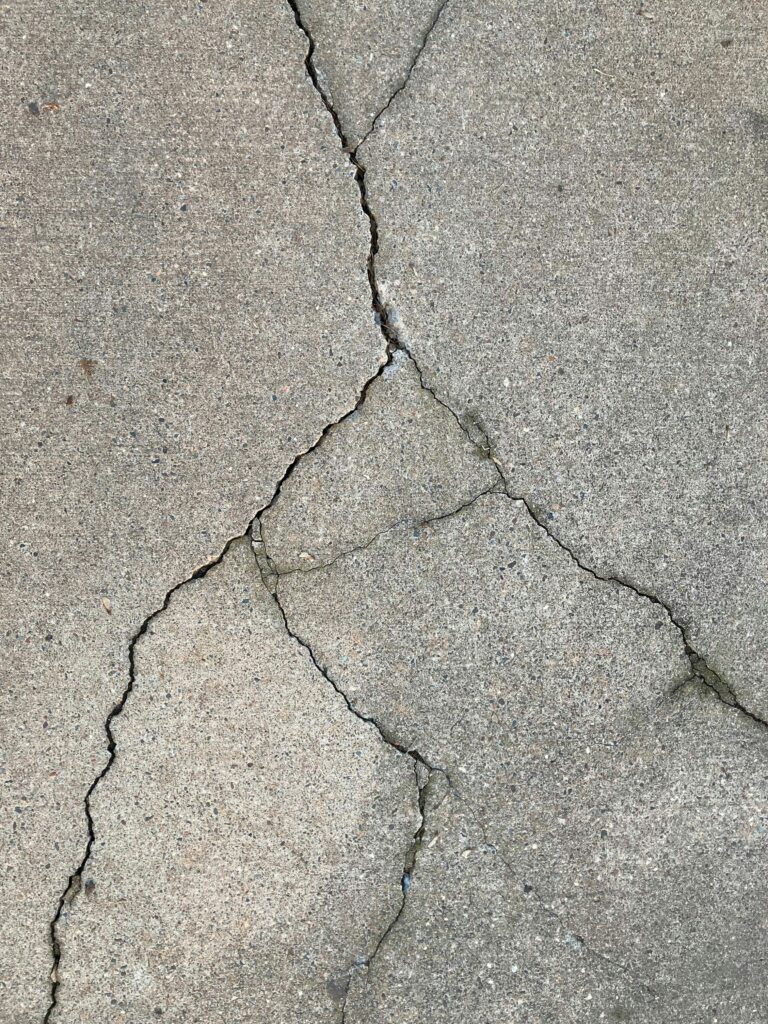
DIY can be reasonable for stable, non-displaced hairline or small cosmetic issues on a sound slab—if you clean thoroughly, use an exterior-rated product, and catch a real dry cure window. Hire (or at least get a photo review) when cracks widen or return, show a vertical lip, the panel rocks, water ponds, scaling is widespread, or someone can trip. Competitor guides often cite rough width bands around ~1/8–1/4 inch as DIY vs hire cues—treat those as general industry guidance, not a universal rule. Olsen does not publish a one-size crack-width rule online; severity is confirmed on assessment.
Stable hairline surface cracks that are not growing week to week. Tiny corner chips or shallow cosmetic spalls on otherwise sound concrete. Monitoring and sealing a dry, clean joint or crack so water stops feeding the base—when displacement and ponding are absent. Joint-specific hire paths live on driveway joint repair / resealing.
Clean out dirt, moss, and loose material—products need a sound bond face. Work in a real dry window; bag mixes and caulks hate wet Western WA weekends. Use exterior-rated flexible fillers or patches—not interior latex. We do not publish product brand recipes, mix ratios, or cure-hour charts.
The patch stays bonded through a wet season and the crack does not reopen beside the fill. No new lip, hollow feel, or ponding at the same spot. If it fails fast, stop stacking more bags—get eyes on the cause.
Vertical displacement or trip lip; rocking or hollow panels; cracks that lengthen or widen after rain; pattern or map cracking across large areas; full-depth splits with differential settlement. Public flatwalk lip framing belongs on sidewalk trip hazard repair when that is the real problem.
Ponding on the crack, garage-line water, downspouts feeding the slab, or edge washout. Sealing a crack that is a drainage symptom without fixing flow is why patches return. See also: fix drainage before resurfacing.
Spalling or scaling across large fields; peeling bag “overlays”; contaminated bond surface after repeated DIY (oil, paint, failed polymer skins)—pro prep may need grinding. Recurring patches mean the cause was not addressed.
Many hire outcomes are crack treatment plus a bonded overlay on a sound host—not full demo. See also: concrete overlays. Overlay is not a magic coat over rocking, ponding, or a washed-out base—pair with drainage and candidacy. Supporting frame: overlay vs replacement. Another thin DIY coat over a failing host is often the expensive choice. For more restore-vs-replace answers, see our concrete repair FAQ.
A complimentary phone and photo review is the fastest honest DIY-vs-hire read. Send:
Expect an honest answer—including “DIY is fine for that line” when it truly is. Call (425) 215-2560 or start from olsenconcrete.com.
Olsen starts with a complimentary phone/photo review. If a site visit is needed, we’ll schedule a free on-site assessment. You leave with a clear leave-it / DIY-OK / crack-treat + overlay / drainage-first / section-replace recommend—not a scare pitch. Licensed, bonded, and insured. Serving King County, Skagit County, and Snohomish County from a Lake Stevens service-area base. Hours: Mon–Sat 7:00 AM–6:00 PM. Call (425) 215-2560.
More candidacy answers live on our concrete repair FAQ.
Related resources:
DIY can be fine for stable, non-displaced cosmetic hairlines or tiny shallow chips on a sound outdoor slab—if you clean thoroughly, use an exterior-rated filler/patch, and catch a real dry window. Call a pro (or send photos first) when cracks widen or return, show a vertical lip, the panel rocks, water ponds on the line, scaling is widespread, or the spot is a trip hazard. Competitor guides often cite rough width bands (about 1/8–1/4 inch) as DIY vs hire cues—treat those as general guidance, not a universal rule. Olsen does not publish one-size crack-width cutoffs online. Call (425) 215-2560 for a complimentary phone/photo review, then a free on-site assessment if a visit is needed. Hours Mon–Sat 7:00 AM–6:00 PM.
Often because the crack was a symptom (movement, ponding, open water path), prep skipped moss/dirt/loose material, or the product cured in wet weather. Freeze–thaw and repeated rain punish weak bonds. Stacking more bags on a failing host can also contaminate the surface for a later professional overlay. If a patch peels or reopens after one wet season, stop and get the slab and drainage evaluated together—see fix drainage before resurfacing. Start with photos: (425) 215-2560.
Sometimes—when cracks are stable and the host still qualifies for a bonded wearing surface. Unstable movement, ponding, or a contaminated DIY skin need assessment first. For overlay candidacy, see concrete overlays; confirm on review.
When wear or cracking is widespread but the slab is still sound and stable, a bonded overlay can renew the wearing surface after proper prep—often smarter than years of spot bags. Overlay is not the answer for rocking panels, major displacement, or uncorrected washout/ponding. Pair candidacy with drainage fixes when water is driving the failure. Learn more on concrete overlays and the FAQ; confirm on assessment—(425) 215-2560.
Send photos for a complimentary phone review. If a site visit is needed, we’ll schedule a free on-site assessment. Serving King, Snohomish, and Skagit from Lake Stevens. Call (425) 215-2560 (Mon–Sat 7:00 AM–6:00 PM).
Send crack and slab photos for a complimentary phone review—including “DIY is fine” when it truly is. If a site visit is needed, we’ll schedule a free on-site assessment. Hours: Mon–Sat 7:00 AM–6:00 PM.
Or call (425) 215-2560. Licensed, bonded & insured · Lake Stevens service-area base · King, Snohomish & Skagit.