
Condition-first polish vs epoxy for Puget Sound garages and commercial floors—slab finish vs film, and when to restore first.
Proudly serving King, Snohomish & Skagit County, WA
Garage owners and warehouse buyers often hear “polish” and “epoxy” as interchangeable shiny floors—they are not. Polished concrete densifies and refinishes the slab itself; epoxy-type coatings are a bonded film over prepared concrete. This page is a condition- and use-case-first compare for King, Snohomish, and Skagit. Olsen Concrete · Lake Stevens service-area base · (425) 215-2560.
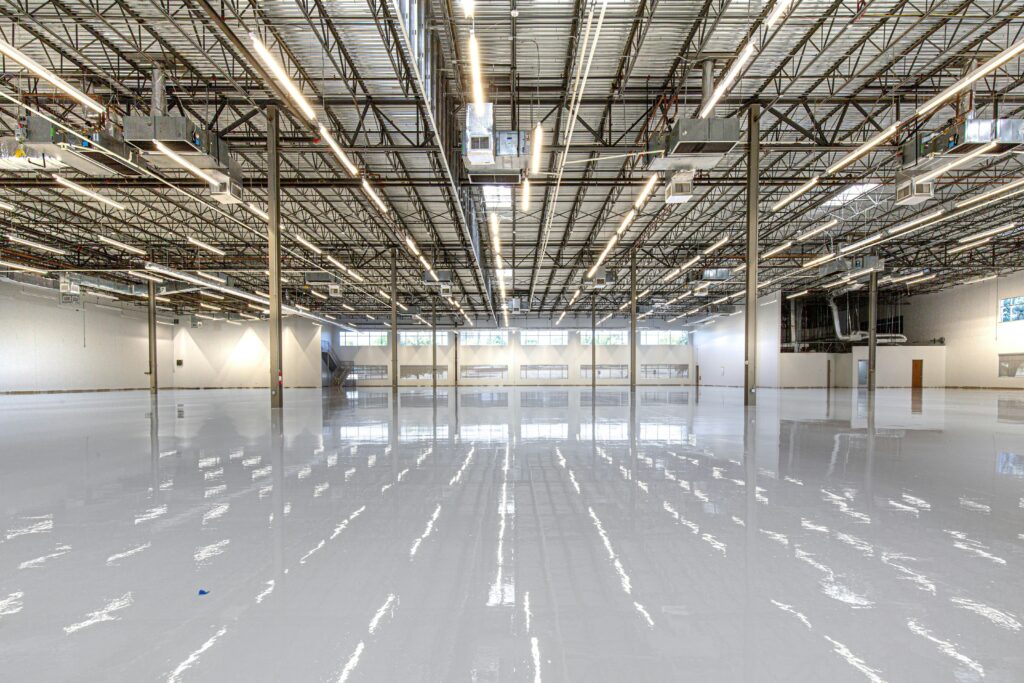
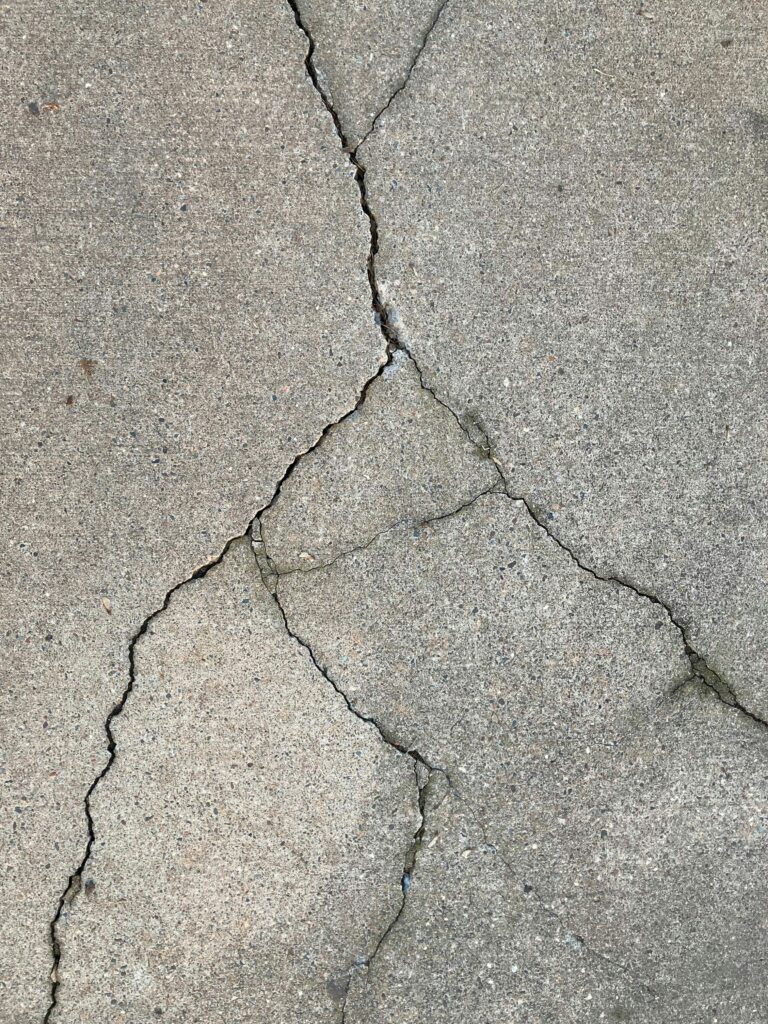
Polish means grind, densify, and polish the existing concrete so the slab becomes the finished wearing surface—there is no film to peel. Epoxy-type coatings (often with polyaspartic or urethane topcoats in the market) are resin films bonded over prepared concrete. Sound, dry, abrasion-focused spaces often favor polish. Oil, chemical, or sealed wipe-down goals on a qualified slab open a coating conversation. Worn, scaled, or poorly prepared slabs usually need neither first—repair, overlay, or moisture work before a finish decision. Selling polish or epoxy on a failing slab is the expensive choice.
If your real choice is rebuilding the wearing surface vs coating it, see garage floor overlay vs epoxy—a different decision from polish vs epoxy. Warehouse polish and overlay sequencing: commercial warehouses. Overlay candidacy: concrete overlays.
Polished concrete is a mechanical process plus densifier. The finish is part of the slab—not a paint layer. Strengths: no film to delaminate; cleanable; light reflectivity; a strong fit for many warehouses, retail floors, and showrooms when slab quality allows. Limits: oils and acids can still stain or etch if left; existing cracks and patches stay visible; wet floors can be slippery unless traction is addressed honestly on assessment.
Polish is not a structural repair, not a moisture cure-all, and not a cover-up for rocking panels. For commercial polish and overlay repair sequencing indoors, see commercial warehouses.
Epoxy and related resin systems are film-forming finishes over prepared concrete. Strengths: seamless look, color or flake options, and a chemical/stain barrier when the system and prep match the use. Limits: moisture vapor and poor prep drive blister and peel stories in wet climates; film can wear or chip under abuse; recoats may be needed over a facility life. DIY kit failures are common; this page steers to assessment, not a DIY tutorial.
Wet tires, road salt, oil, and brake fluid often favor a sealed coating path when the slab and moisture qualify. Polish can still fit dry workshop, gym, or showroom-style garages with low chemical load—and an owner who accepts the slab’s natural look. When the real question is rebuilding a worn garage wearing surface versus coating it, cross to garage floor overlay vs epoxy.
Dry distribution and light-industrial abrasion often make polish the CapEx-smart path on a sound slab. Chemical process areas, washdown, heavy oil, or marked safety lanes may need coating or specialty resin systems—scoped honestly, with referral when the product set is outside what Olsen installs. When CapEx is about the failing slab itself—not the finish—see commercial overlay vs replace.
| Factor | Often favors polish | Often favors epoxy-type coating | Favors neither alone |
|---|---|---|---|
| Problem / goal | Abrasion, dust control, no peel film, natural concrete look | Stain/chemical barrier, color/flake, sealed wipe-down | Failed structure / rocking / heaving |
| Garage daily drivers + oils | Low-chemical dry shop/gym | After moisture + mechanical prep | Unresolved water intrusion |
| Warehouse / showroom | Sound slab, forklift abrasion, light reflectivity | Chemical zones / branded floors | Base failure |
| PNW moisture | Still needs a sound slab; less “trapped vapor under film” risk | Requires honest moisture screening | Chronic wet slab |
Finish level, system chemistry, and prep are scoped on assessment to your traffic and slab condition—not from online $/sq ft tables.
Scaling, deep abrasion, joint breakout, or failed prior coatings point to repair or concrete overlays before polish or a new film. Failed epoxy already on the floor needs strip plus bond and moisture screening before any new system—echoed on the garage overlay-vs-epoxy FAQ. Rocking panels, heaving, or failed sub-base need demo, section replace, or a new pour—not a prettier surface. One sentence: selling polish or epoxy on a failing slab is the expensive choice. For bigger restore-vs-replace decisions, see commercial overlay vs replace; for residential projects, see overlay vs replacement.
Olsen polishes commercial and suitable interior slabs when candidacy is real. Overlay, patch, and repair worn but salvageable floors (warehouse sequence; garage overlay path). Honest second opinion on coating bids that skipped moisture or mechanical prep. Olsen is not a decorative flake-floor franchise—if that is the only goal, tell us and we will assess or refer you rather than force a mismatch. Olsen is also not an industrial resin-flooring specialist for food-plant urethane mortar and similar systems.
A complimentary phone and photo review is the fastest start for garage owners and facility leads. Send:
Call (425) 215-2560 or start from olsenconcrete.com.
Olsen starts with a complimentary phone/photo review. If a site visit is needed, we’ll schedule a free on-site assessment. The recommendation is polish when the slab is ready; coating-path when goals and moisture/prep fit (or honest referral); overlay-first when the wearing surface is worn; replace when structure has failed. Licensed, bonded, and insured. Serving King County, Skagit County, and Snohomish County from a Lake Stevens service-area base. Hours: Mon–Sat 7:00 AM–6:00 PM. Call (425) 215-2560.
More candidacy answers live on our concrete repair FAQ.
Related resources:
Neither is universally better. Polished concrete densifies and refinishes the existing slab—there is no coating film to peel—but oils, road salt, and chemicals can still stain or etch if they sit. Epoxy-type coatings create a sealed film that often fits daily-driver garages when the slab is sound and moisture and mechanical prep are handled honestly. If the garage slab is scaled, cracked with displacement, or already peeling, fix or overlay the concrete first—or replace what has failed—before choosing a finish. Olsen screens King, Snohomish, and Skagit garages with a complimentary phone/photo review, then a free on-site assessment if a visit is needed. Call (425) 215-2560 (Mon–Sat 7:00 AM–6:00 PM).
For many dry warehouses and light-industrial floors focused on forklift abrasion, dust control, and long wear without a peelable film, polished concrete on a sound slab is often the better fit. Epoxy or related resin systems can make more sense where oils, chemicals, washdown, or marked/colored floors are the priority—and only after proper prep and moisture screening. Worn warehouse slabs may need overlay or repair before either finish holds. Olsen pairs commercial polishing with overlay repair across King, Snohomish, and Skagit from a Lake Stevens service-area base: (425) 215-2560.
Epoxy and similar films can blister or delaminate when moisture vapor and poor surface prep are ignored—a real risk on damp Western Washington slabs. That is a jobsite and system issue, not a reason to panic-buy or skip professional screening. Moisture evaluation and mechanical preparation belong in any serious coating bid; polishing avoids a trapped film but still needs a sound slab. Send photos for a condition-first read before you accept a “quick coat” bid: (425) 215-2560.
Usually not until the film is removed and the slab is screened for bond, moisture, and soundness. Polishing is a slab finish, not a coat over a peeling resin. If the concrete underneath has failed, neither polish nor a new coating fixes structure—assessment decides. Related garage path: garage floor overlay vs epoxy.
Sometimes. When the wearing surface is scaled, deeply abraded, or patchy but the slab is still structurally sound, a bonded concrete overlay (or targeted repair) may come first so polish or a coating has something honest to bond to. Rocking or heaving panels skip the finish conversation until the base is fixed.
Send floor photos for a complimentary phone review. If a site visit is needed, we’ll schedule a free on-site assessment.
Or call (425) 215-2560. Licensed, bonded & insured · Mon–Sat 7:00 AM–6:00 PM · King, Snohomish & Skagit.